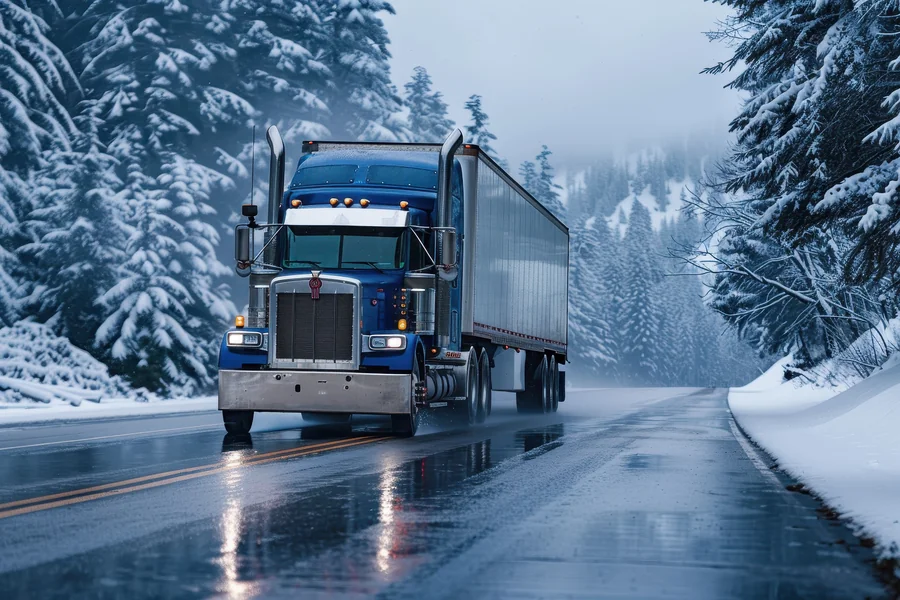
Winter Trucking in the Hudson Valley: How Cold Weather Changes Your Risk Profile
Commercial drivers who run the Northeast year-round develop a kind of winter fluency that’s hard to teach in a classroom. They know which grades on I-84 ice first, which bridge decks stay slick hours after the road surface has dried, and what diesel fuel behaves like at 5 degrees Fahrenheit when you haven’t treated the tank. That knowledge comes from experience, and the years when the experience was costly are the years that stuck.
What Cold Weather Does to Commercial Equipment
Diesel fuel is the first concern. Standard diesel begins to cloud and eventually gel as temperatures drop, which restricts fuel flow and can bring an engine down without any mechanical failure. Most Northeast operators run treated fuel or add anti-gel additives through winter, but fuel sitting in a tank over a cold weekend without treatment can cause problems that look like engine trouble on a Monday morning. The fix is simple when you anticipate it; it’s a tow when you don’t.
Air brake systems accumulate moisture in their lines over time, and in freezing temperatures that moisture turns to ice. Brake line freeze is one of the more dangerous cold-weather failures because it can be intermittent — brakes that tested fine before departure stop responding at highway speed. Air dryer cartridge maintenance, which many operators defer in warmer months, becomes genuinely critical by November.
Batteries lose a significant percentage of their cranking capacity in cold weather. A battery that starts a truck reliably at 60 degrees may not have enough reserve to turn over a cold diesel engine at 15 degrees. Testing battery health before winter and replacing anything marginal avoids a lot of cold-morning calls to roadside assistance.
Heavy Duty Towing: Why the Hudson Valley Needs Specialized Recovery
Heavy duty towing in winter conditions requires equipment and operator skills that go beyond summer recovery. A truck that slides off a shoulder on an icy grade may be in a position that requires careful rigging to extract without secondary damage. Snow-covered embankments, soft frozen ground, and reduced traction for the recovery vehicle itself all complicate the operation. Operators who haven’t worked these conditions before can make a difficult recovery worse.
NYS Heavy Repair has been running commercial recovery in the Hudson Valley through 25-plus winters. Their operators know the specific problem spots on I-84, Route 6, and the secondary roads that connect Port Jervis to the rest of Orange and Rockland counties. That familiarity with the terrain — knowing which embankments are deceptively soft, which grades make rigging angles difficult — is the kind of thing that doesn’t appear in a company’s marketing but shows up in how quickly and cleanly a recovery goes.
Heavy Duty Truck Repair: Winter-Specific Work the Shop Sees Most
Heavy duty truck repair through the winter months at NYS Heavy Repair follows predictable patterns. Fuel system work — clearing gelled lines, servicing fuel filters, diagnosing injector problems caused by contaminated fuel — runs heavy in January and February. Brake system work, particularly air dryer service and brake chamber replacement, is consistent through the cold months. Electrical issues related to battery and starter failure come in clusters during the coldest stretches.
The shop also sees damage from road salt. Salt accelerates corrosion on brake hardware, air line fittings, and undercarriage components in ways that don’t cause immediate failures but compound over time. An annual undercarriage inspection in late fall — before the salt season — and a thorough flush and inspection in spring are the bookends that catch the worst of it. Operators who skip those intervals tend to find out what they missed in a more expensive way.
Preparing Before the Season Starts
The best winter preparation happens in October, before temperatures drop and before the shop’s appointment book fills with reactive work. That window allows for a thorough PM inspection, fuel system servicing, battery testing, brake system check, and any deferred maintenance that could compound in cold conditions. Trucks that go into winter with known issues tend to surface those issues at the worst possible time — a below-zero morning, a remote stretch of highway, a full load.
NYS Heavy Repair handles winter preparation work alongside their year-round repair and towing services. For operators in the Hudson Valley and tri-state area, they can be reached at 845-734-1300. The Ciano family has been keeping commercial trucks running through Northeast winters since 1998, and the shop’s depth of experience with cold-weather failures is reflected in how quickly they diagnose and resolve them.