A Beginner’s Guide to DTF Printing for Custom Apparel Success
The custom apparel industry has experienced remarkable growth over the past few years. From small online clothing brands to local print shops, businesses are constantly looking for efficient ways to create high-quality customized garments. As customer demand for personalized clothing continues to rise, printing technologies have evolved to offer more flexibility, better quality, and faster production.
Among the most talked-about innovations in garment decoration is Direct-to-Film printing, commonly known as DTF printing. This method has become increasingly popular because it allows vibrant, durable designs to be transferred onto a variety of fabrics without many of the limitations associated with traditional printing methods.
Many newcomers entering the industry often ask, what is a dtf printer and why has it become such an important tool for apparel businesses? The answer lies in its versatility, cost-effectiveness, and ability to produce professional-quality prints on different types of garments.
Alongside the printer itself, materials such as dtf sheets and equipment like a heat press for shirts play a critical role in achieving successful results. Understanding how these components work together can help business owners, hobbyists, and entrepreneurs make informed decisions before investing in DTF technology.
This guide explores the fundamentals of DTF printing, the importance of transfer materials, and the equipment required to build a reliable and efficient custom apparel operation.
Understanding What a DTF Printer Is and How It Works
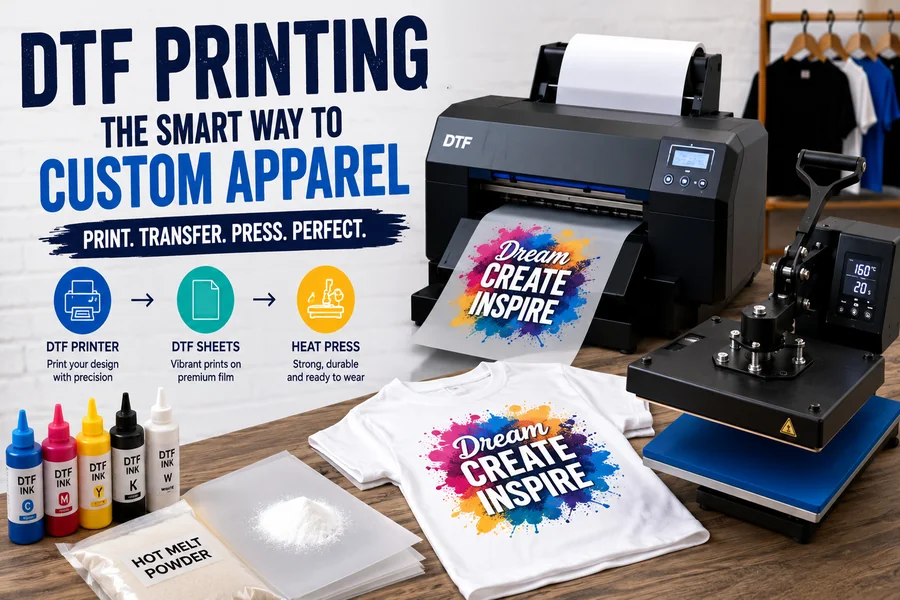
One of the most common questions asked by beginners is, what is a dtf printer? Simply put, a DTF printer is a specialized printing system that creates designs on a transfer film rather than printing directly onto fabric. These designs are later transferred to garments using heat and pressure.
The process begins by printing artwork onto a specially coated film. The design is typically printed in reverse order, allowing it to transfer correctly onto the final garment. After printing, a layer of adhesive powder is applied to the wet ink before the design is cured.
Once cured, the transfer becomes ready for application. Using a heat press, the printed design is permanently bonded to the fabric surface. This process creates vibrant colors, sharp details, and durable results that can withstand repeated washing.
One reason DTF printing has gained widespread popularity is its ability to work on multiple fabric types. Unlike some printing methods that perform best on specific materials, DTF transfers can be applied to cotton, polyester, blends, and many other textiles.
This flexibility makes DTF technology attractive to businesses that want to offer a broad range of products without investing in multiple printing systems. From t-shirts and hoodies to tote bags and workwear, DTF printing provides a versatile solution for garment decoration.
As the demand for customized apparel continues to expand, understanding what a dtf printer does is becoming increasingly important for anyone entering the printing industry.
Why DTF Printing Is Growing in Popularity
The rise of DTF printing is not simply a trend. It reflects the changing needs of both businesses and consumers. Customers increasingly expect personalized products, fast turnaround times, and professional-quality designs.
Traditional methods such as screen printing often require significant setup work, especially for multi-color designs. While screen printing remains effective for large production runs, it can become less practical for smaller orders and custom requests.
DTF printing addresses many of these challenges by allowing businesses to create detailed designs without extensive setup requirements. This makes it ideal for on-demand printing, personalized apparel, and short production runs.
Another advantage is the quality of the finished product. DTF transfers produce vivid colors and excellent detail reproduction, even for complex artwork. This capability allows businesses to offer premium products while maintaining production efficiency.
Cost efficiency also contributes to its growing popularity. Small businesses can enter the custom apparel market with lower initial investment compared to some alternative printing technologies. This accessibility has helped many entrepreneurs launch successful apparel ventures.
The combination of versatility, quality, and affordability continues to drive interest in DTF printing across the apparel industry.
The Important Role of DTF Sheets in Print Quality
While the printer itself receives much of the attention, dtf sheets are equally important in the production process. These specialized transfer films serve as the foundation upon which designs are printed before being transferred to garments.
High-quality dtf sheets help ensure accurate color reproduction and sharp image detail. Because the film directly affects how ink is deposited and transferred, using premium materials can significantly improve overall print quality.
Poor-quality films may lead to issues such as uneven ink absorption, blurry details, or transfer failures. These problems not only waste materials but can also affect customer satisfaction and business reputation.
Consistency is another important benefit of reliable dtf sheets. Professional apparel businesses need predictable results across multiple orders. High-quality transfer films help maintain consistent performance and reduce production errors.
Proper storage of transfer sheets is equally important. Exposure to moisture, dust, or extreme temperatures can negatively impact performance. Keeping materials in a clean, dry environment helps preserve their quality and reliability.
By selecting quality dtf sheets and handling them correctly, businesses can improve print consistency and create more professional finished products.
Choosing the Right Heat Press for Shirts
A successful DTF setup requires more than a printer and transfer film. A dependable heat press for shirts is essential for applying designs accurately and consistently.
The heat press serves as the final step in the transfer process. It applies the temperature and pressure needed to bond the printed design permanently to the garment. Even a perfectly printed transfer can fail if the heat press does not perform properly.
Temperature accuracy is one of the most important features to consider. Consistent heat distribution ensures that transfers adhere evenly across the garment surface. Uneven temperatures may result in peeling, fading, or incomplete transfers.
Pressure control is equally important. Different fabrics and transfer materials often require specific pressure settings. A quality heat press allows users to make precise adjustments for optimal results.
Durability should also be considered when selecting equipment. A reliable heat press for shirts can support years of production while maintaining consistent performance. Investing in quality equipment often reduces maintenance costs and production interruptions.
Ease of use can further improve workflow efficiency. Features such as digital controls, programmable settings, and user-friendly interfaces help streamline production and reduce operator errors.
For businesses focused on custom apparel, the heat press is one of the most valuable tools in the production process.
Building an Efficient DTF Printing Workflow
Having the right equipment is only part of the equation. Establishing a smooth and organized workflow helps improve productivity while maintaining high-quality standards.
The process begins with creating high-resolution artwork. Clean, properly prepared designs contribute significantly to final print quality. Investing time in design preparation often reduces production issues later.
Once the artwork is ready, printing begins. The design is printed onto dtf sheets using specialized inks and printer settings. Careful attention during this stage helps ensure accurate color reproduction and sharp detail.
After printing, adhesive powder is applied to the design. The powder must be distributed evenly to ensure proper adhesion during transfer. Any inconsistency at this stage can affect durability and appearance.
The transfer is then cured according to manufacturer specifications. Proper curing is essential because it prepares the design for successful application onto fabric.
Finally, the transfer is applied using a heat press for shirts. Following recommended temperature, pressure, and timing guidelines helps achieve professional-quality results.
A structured workflow improves efficiency, reduces waste, and supports consistent product quality across all orders.
Common Mistakes Beginners Should Avoid
Starting a DTF printing business can be exciting, but beginners often encounter avoidable challenges. Understanding common mistakes can help save time, money, and frustration.
One frequent issue is focusing exclusively on equipment price. While budget considerations matter, choosing the cheapest option often leads to performance limitations and increased maintenance costs. Quality equipment usually delivers better long-term value.
Another common mistake involves neglecting material quality. Using inferior dtf sheets may seem cost-effective initially, but poor transfer performance can result in wasted products and dissatisfied customers.
Improper printer maintenance is another challenge. DTF printers require regular cleaning and care to prevent clogged print heads and inconsistent print quality. Routine maintenance helps protect the investment and maintain reliable operation.
Many beginners also overlook testing. Different garments and fabrics may require slight adjustments in temperature or pressure. Performing test transfers helps identify optimal settings before producing customer orders.
Rushing production can create additional problems. Skipping steps or ignoring recommended procedures often results in lower-quality products and unnecessary rework.
Learning from these common mistakes allows businesses to establish a stronger foundation and improve their chances of long-term success.
The Future of DTF Printing in the Apparel Industry
The future of DTF printing appears exceptionally promising. As customization continues to influence consumer purchasing decisions, businesses are looking for technologies that offer flexibility and efficiency.
DTF printing aligns well with these market trends because it supports short production runs, personalized products, and on-demand manufacturing. These capabilities are increasingly important in today’s competitive apparel industry.
Advancements in printer technology continue to improve print quality, production speed, and reliability. As equipment becomes more accessible, more businesses are expected to adopt DTF solutions.
Material innovation is also contributing to industry growth. Manufacturers are developing improved inks, adhesives, and dtf sheets that enhance durability and simplify production processes.
At the same time, modern heat press systems are becoming more precise and user-friendly. Improved controls and automation features help businesses maintain consistent quality while increasing productivity.
For entrepreneurs and apparel decorators, DTF printing offers significant opportunities for growth. Understanding what is a dtf printer and how the technology works today can help businesses position themselves for future success.
Conclusion
DTF printing has transformed the custom apparel industry by providing a flexible, cost-effective, and high-quality method for garment decoration. Its ability to produce vibrant designs on a wide range of fabrics makes it an attractive option for businesses of all sizes.
Understanding what is a dtf printer is the first step toward building a successful apparel production system. However, achieving professional results also depends on selecting quality dtf sheets and using a reliable heat press for shirts.
Together, these components create a workflow capable of producing durable, attractive, and consistent designs. Whether you are launching a new custom apparel business or expanding an existing operation, investing in the right equipment and materials can make a significant difference.
As demand for personalized products continues to grow, DTF printing is likely to remain one of the most valuable technologies in the garment decoration industry. Businesses that focus on quality, efficiency, and customer satisfaction will be well-positioned to take advantage of the opportunities ahead.